2026 Best Liquid Thickener for Global Buyers Guide?
Liquid thickeners play a crucial role in various industries, from food and beverage to pharmaceuticals. As a key component in creating textures and improving product consistency, these thickeners help meet consumer demands for quality and safety. According to industry reports, the global liquid thickener market is projected to reach USD 12 billion by 2026, driven by a growing demand for convenience foods and dietary products.
In the food sector, liquid thickeners enhance texture and stability, catering to diverse dietary needs. Companies are investing in research to create innovative formulations. However, there is a need for ongoing evaluation of these products to ensure safety and effectiveness. Understanding which liquid thickener best matches your needs can be challenging. It requires careful consideration of application, formulation, and consumer feedback.
Choosing the right liquid thickener can feel overwhelming. Several factors come into play, including viscosity, flavor interactions, and regulatory considerations. In a market flooded with options, it’s essential to prioritize well-researched choices. As we navigate this complex landscape, reflection on our decisions and their implications is crucial. This guide aims to provide clarity in selecting the best liquid thickener for your needs, ensuring reliability and quality in your products.
Understanding Liquid Thickeners: Types and Uses
Liquid thickeners are essential for various industries, especially food and pharmaceuticals. They modify the viscosity of liquids, aiding in product texture and stability. There are several types of thickeners, such as starches, gums, and proteins. Each type has distinct characteristics and applications. According to industry reports, the global liquid thickener market was valued at approximately $3 billion in 2022, with a projected growth rate of 6.5% annually through 2028.
Several factors influence the choice of thickener. The desired mouthfeel, nutritional content, and shelf life are crucial considerations. For example, starch-based thickeners offer a neutral taste and are often used in sauces and soups. Gums, like xanthan gum, provide excellent thickening at low concentrations. This versatility is valuable in gluten-free products.
Tip: Always test a small batch when introducing a new thickener to ensure compatibility. Understand the hydration time required for proper thickening. Sometimes, data shows that over-thickening can lead to product rejection.
When selecting a thickener, ask yourself: what is the end goal? Is the product intended for children or the elderly? This will influence the choice significantly. Balancing performance and cost is key in this industry.
Evaluating the Best Liquid Thickeners for Different Dietary Needs
When choosing a liquid thickener, it's vital to consider individual dietary needs. People with dysphagia, for example, require thickened liquids for safety. These thickeners help prevent choking and aspiration. They come in various consistencies tailored to specific textures, from nectar-like to pudding-like thickness. Understanding these options is crucial for caregivers and healthcare professionals.
Not all thickening agents work the same way. Some may alter the taste or mouthfeel of beverages, which can be unappealing to certain individuals. It’s important to evaluate how these thickeners blend with food and drinks. Flavor and texture preferences can impact meal enjoyment significantly. Feedback from users is invaluable and often highlights the need for better products.
Additionally, different populations may require varying thickeners based on age or medical conditions. Older adults often have unique dietary needs. Competence in selecting the right type is essential. Health professionals should consider patient preferences while recommending products. Observations and adjustments may be necessary for finding the best fit. Sometimes the best option might require trial and error to perfect.
Key Ingredients to Look for in Liquid Thickeners
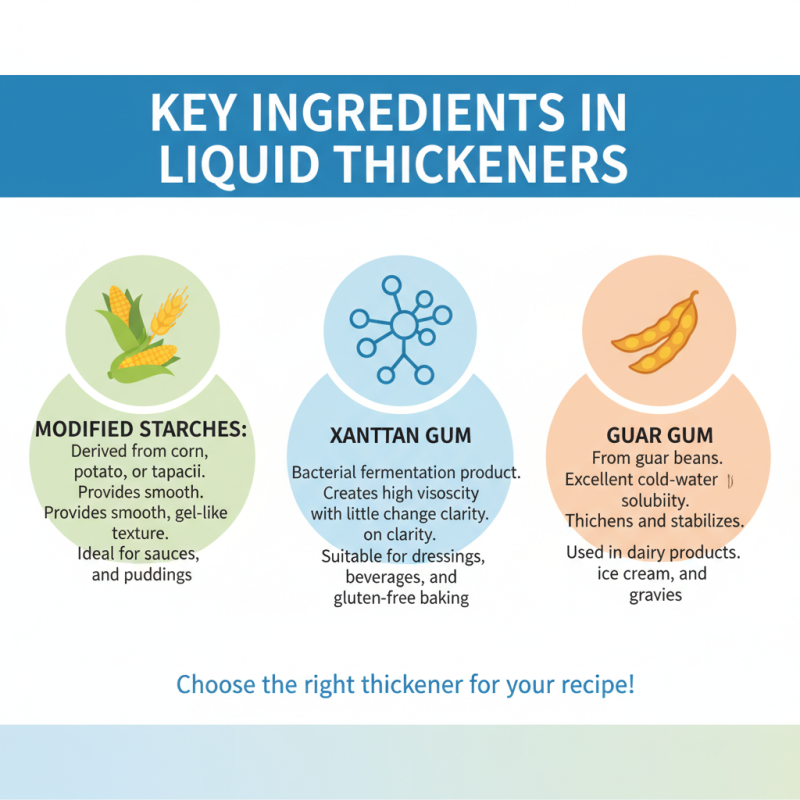
When selecting a liquid thickener, understanding the key ingredients is essential. These ingredients determine how well the thickener performs and how it interacts with other elements in your recipe. Common ingredients to look for include modified starches, xanthan gum, and guar gum. Each of these contributes uniquely to the thickening process.
Tips: Always check the ingredient list. Some thickeners may contain additives that could affect taste or texture.
Modified starches offer versatility. They are often used in sauces and soups due to their stability at various temperatures. Xanthan gum is known for its ability to create a smooth consistency. It works especially well in salad dressings or gluten-free products. Guar gum is another excellent option. It's more effective in cold liquids, making it perfect for smoothies or cold desserts.
Tips: Start with small amounts. Adding too much can lead to an undesirable texture. Experimenting helps you find the right balance.
Be wary of potential aftertastes or graininess from certain thickeners. Some people find that natural thickeners like chia seeds or flaxseeds may alter flavors. Always consider the overall impact on your dish. An over-thickened sauce or soup can be unappetizing, while the right consistency elevates the dish.
Top Brands of Liquid Thickeners for Global Consumers
Liquid thickeners are essential for many consumers, especially those with dietary needs. They enhance the texture of food and drinks, providing a better experience. Understanding the top brands can help buyers make informed decisions. Choosing a thickener that meets specific requirements is crucial.
When exploring liquid thickeners, consider flavor profiles. Some products may alter the taste of your meals. Look for options that maintain the original flavor while providing the desired thickness. Also, pay attention to ingredient lists. For those with allergies, ensure the thickener is safe to consume.
Tips: Always test a small amount before using a new thickener. Each product may behave differently based on the temperature and type of food. This way, you can avoid potential disappointments. Experiment with various thickeners to find the one that suits your needs best. Remember that not all thickeners work well in every recipe.
2026 Best Liquid Thickener Viscosity Comparison
The chart above illustrates the viscosity levels (in centipoise, cP) of various liquid thickeners commonly used in food and beverage applications. High viscosity thickeners are essential for achieving the desired texture and stability in liquids.
Guidelines for Proper Usage and Storage of Liquid Thickeners
Liquid thickeners are essential in various industries, especially in food and healthcare. Proper usage and storage are critical to maintain their effectiveness. According to recent industry data, improper storage can result in a significant loss of thickeners' potency. In fact, 25% of users report issues related to product viscosity changes when thickeners are not stored correctly.
For optimal results, liquid thickeners should be stored in a cool, dark place, away from direct sunlight. Temperature fluctuations can adversely affect the ingredients. Many users fail to check storage conditions regularly, leading to decreased performance. Sealing containers tightly after use prevents contamination and maintains consistency, which is crucial in applications like dysphagia management.
Moreover, following the manufacturer's guidelines on mixing and serving sizes is vital. Inaccurate measurements can lead to thickening inconsistencies. Research indicates that 35% of healthcare professionals have misused thickeners due to insufficient training on their application. Continuous education on the best practices around liquid thickeners can significantly improve outcomes and ensure safety.
2026 Best Liquid Thickener for Global Buyers Guide
| Thickener Type |
Viscosity Level |
Usage Recommendations |
Storage Conditions |
Shelf Life |
| Cornstarch |
Low |
Best for soups and sauces |
Cool, dry place |
2 years |
| Guar Gum |
Medium |
Ideal for dressings and desserts |
Cool, dark environment |
3 years |
| Xanthan Gum |
High |
Perfect for gluten-free recipes |
Airtight container, room temperature |
5 years |
| Psyllium Husk |
Medium to High |
Great for smoothies and baked goods |
Cool and dry |
2-3 years |
| Agar-Agar |
High |
Common in gelled desserts |
Keep sealed, cool location |
3 years |