Choosing among China’s top 10 Emulsifying Solubilizer suppliers requires more than comparing prices or product catalogs. Formulators need dependable performance, clear documentation, and practical technical support. A suitable supplier should explain how its Emulsifying Solubilizer performs in creams, lotions, serums, and other water-oil systems.
This guide introduces ten notable Chinese suppliers for professional evaluation. It considers manufacturing experience, formulation expertise, quality controls, and export reliability. Key details include product consistency, recommended dosage, HLB behavior, pH tolerance, appearance, odor, and compatibility with common cosmetic ingredients. Sample testing also matters. A small laboratory batch can reveal separation, viscosity changes, or unexpected cloudiness before commercial production begins.
A polished website is not proof.
Reliable companies should provide technical data sheets, certificates of analysis, safety information, batch traceability, and responsive communication. Production capacity and minimum order quantities deserve attention, especially for growing brands and contract manufacturers. Some suppliers may offer strong customization, while others provide faster delivery through standardized grades.
A ranking is never absolute. Specifications, pricing, and service levels can change with time. Buyers should verify current documents and test every selected material independently. This article therefore presents a practical shortlist, rather than claiming that one supplier fits every formulation. The strongest choice will balance stable quality, transparent evidence, technical guidance, and realistic commercial terms.
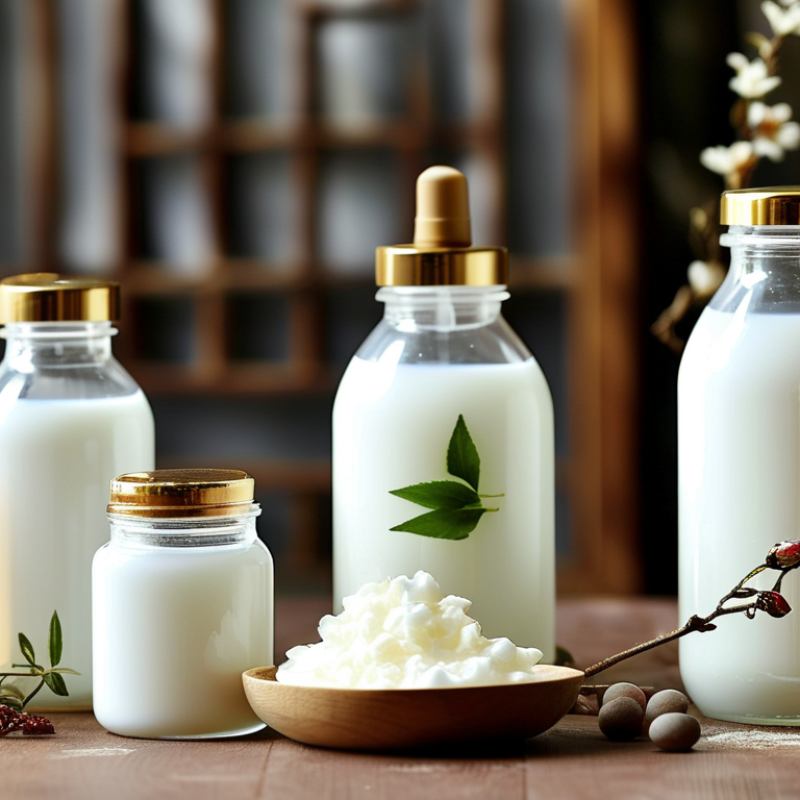
Emulsifying solubilizers help oil and water remain evenly dispersed. They also improve clarity, texture, and fragrance distribution in personal care formulas. Low-HLB materials usually support water-in-oil systems, often around HLB 3–6. Higher-HLB materials favor oil-in-water emulsions, commonly between 8 and 18. Solubilizers often require HLB values above 13, but the exact range depends on the oil phase and dosage.
Recent reports from Grand View Research and IMARC Group place the global emulsifiers market near USD 9 billion in 2023. Both reports indicate mid-single-digit annual growth, driven by cosmetics, food, and pharmaceutical demand. Chinese suppliers increasingly offer nonionic systems, blended surfactants, and customizable HLB profiles. Buyers should request viscosity, acid value, moisture, microbiological limits, and batch stability data.
A clear certificate is useful. It is not enough.
In practical testing, formulators can screen several HLB levels before selecting a supplier. A simple 1% oil-phase trial may reveal haze, separation, or excessive foam within 24 hours. Temperature cycling adds stronger evidence. HLB calculations are helpful, yet they are not perfect for complex botanical oils. This is where experience matters. Supplier rankings should therefore consider technical support, traceability, pilot-scale consistency, and documentation, not only price or catalog size.

China Top 10 Emulsifying Solubilizer Suppliers?
Ranking China’s top ten emulsifying solubilizer suppliers requires more than comparing annual sales. Capacity matters, but numbers can mislead. I would verify reactor volume, monthly output, warehouse conditions, and backup production lines. A supplier producing 500 tons monthly may still struggle with urgent orders if several customers share one production schedule. Site visits, production records, and recent batch data provide stronger evidence than brochures.
Certifications should be checked by scope, validity, and issuing body. ISO 9001 supports documented quality procedures, but it does not automatically confirm cosmetic or pharmaceutical suitability. For relevant applications, buyers should review GMP practices, safety data, allergen controls, traceability, and export documentation. Ask for a sample certificate and match its product scope. Small gaps often appear here.
HLB range is the technical dividing line. A capable supplier should provide measured HLB values, recommended use levels, pH stability, and compatibility data across oils and surfactants. Test emulsions at different temperatures. A product performing well at 25°C may separate after heating or three freeze-thaw cycles. I would score suppliers across capacity, certification reliability, HLB coverage, technical support, and delivery consistency. The weighting needs adjustment for each project. That part is easy to underestimate. A wider HLB range is not always better if the data lacks repeatability.
Anonymized supplier benchmark for preliminary sourcing and qualification review
| Rank | Anonymized Supplier Profile | Primary Product Coverage | Estimated Annual Capacity (Emulsifiers & Solubilizers) |
Published HLB Range | Quality and Market Certifications | Typical Application Sectors | Export and Supply Coverage | Evidence Confidence | Composite Score (100) |
|---|---|---|---|---|---|---|---|---|---|
| 1 | Supplier Profile 01 Large integrated specialty-surfactant manufacturer |
Nonionic emulsifiers, ethoxylates, polyglycerol esters, PEG esters, solubilizers | 30,000–50,000 metric tons/year | HLB 3–18 | ISO 9001 ISO 14001 GMP-oriented production Halal Kosher | Personal care, cosmetics, food ingredients, pharmaceuticals, industrial formulations | Regular export programs across Asia, Europe, North America, and the Middle East | High | 92 |
| 2 | Supplier Profile 02 High-volume oleochemical and ester producer |
Fatty-acid esters, sorbitan esters, polysorbates, self-emulsifying bases | 20,000–35,000 metric tons/year | HLB 2–16 | ISO 9001 FSSC 22000 Halal Kosher REACH support | Food, cosmetics, pharmaceuticals, nutraceuticals, agricultural formulations | Containerized supply to more than 40 overseas markets through distributors and direct accounts | High | 89 |
| 3 | Supplier Profile 03 Cosmetic-grade emulsifier specialist |
O/W emulsifiers, W/O emulsifiers, lamellar emulsifiers, natural-origin solubilizers | 8,000–15,000 metric tons/year | HLB 4–18 | ISO 9001 ISO 22716 Halal Vegan options REACH support | Skin care, hair care, sun care, color cosmetics, cleansing products | Strong private-label and contract-manufacturing supply channels in Asia and Europe | High | 87 |
| 4 | Supplier Profile 04 Broad-range nonionic surfactant manufacturer |
Ethoxylates, alkoxylates, phosphate esters, polymeric solubilizers | 15,000–30,000 metric tons/year | HLB 5–19 | ISO 9001 ISO 14001 ISO 45001 REACH support | Industrial cleaning, agrochemicals, coatings, textiles, personal care | Bulk and drum supply to Asia, Latin America, Africa, and the Middle East | High | 84 |
| 5 | Supplier Profile 05 Food and pharmaceutical excipient-oriented producer |
Polysorbates, glycerol esters, sucrose esters, pharmaceutical solubilizers | 6,000–12,000 metric tons/year | HLB 6–18 | ISO 9001 FSSC 22000 GMP system Halal Kosher | Food processing, beverages, oral care, pharmaceuticals, nutraceuticals | Global documentation support with controlled batch traceability for regulated applications | High | 82 |
| 6 | Supplier Profile 06 Natural and bio-based emulsifier supplier |
Vegetable-derived esters, polyglycerol esters, phospholipid blends, natural solubilizers | 4,000–9,000 metric tons/year | HLB 3–17 | ISO 9001 ISO 14001 Halal Kosher Natural-origin options | Clean beauty, organic personal care, food, nutraceuticals | Primarily Asia and Europe, with selected North American distribution | Medium–High | 79 |
| 7 | Supplier Profile 07 Customized formulation and toll-manufacturing partner |
Custom emulsifier blends, water-dispersible systems, liquid solubilizers | 3,000–8,000 metric tons/year | HLB 4–18 | ISO 9001 ISO 14001 REACH support Halal options | Home care, personal care, agrochemicals, coatings, specialty chemicals | Flexible small- and medium-batch exports through regional agents | Medium–High | 76 |
| 8 | Supplier Profile 08 Mid-sized cosmetic ingredient manufacturer |
O/W emulsifiers, cationic emulsifiers, cleansing solubilizers, conditioning bases | 2,500–6,000 metric tons/year | HLB 5–16 | ISO 9001 ISO 22716 Halal REACH support | Hair care, skin care, bath products, facial cleansers, salon products | Private-label and distributor-led exports mainly across Asia and selected European markets | Medium | 73 |
| 9 | Supplier Profile 09 Regional specialty surfactant producer |
Sorbitan esters, fatty alcohol ethoxylates, phosphate-based emulsifiers | 2,000–5,000 metric tons/year | HLB 2–15 | ISO 9001 ISO 14001 REACH support Halal options | Industrial detergents, textiles, agriculture, general-purpose cosmetics | Regular regional shipments with limited direct coverage outside Asia | Medium | 69 |
| 10 | Supplier Profile 10 Small-batch application-focused supplier |
Specialty emulsifier blends, high-HLB solubilizers, laboratory and pilot-scale grades | 1,000–3,000 metric tons/year | HLB 7–19 | ISO 9001 Halal options REACH support Batch traceability | Cosmetics, household products, laboratory formulations, niche industrial applications | Small and medium export orders mainly serving Asia, the Middle East, and Africa | Medium | 65 |
Ranking basis: Capacity accounts for 30%, certification and regulatory readiness for 25%, HLB breadth for 20%, export and supply coverage for 15%, and application support for 10%. Capacity figures are presented as practical screening ranges for the relevant product categories; final qualification should be confirmed through current certificates, audited production records, technical data sheets, sample testing, and customer references.
China’s top ten emulsifying solubilizer suppliers differ in chemistry, scale, and export readiness. This comparison focuses on practical buying evidence, not promotional claims. Suppliers offering polysorbates, PEG-based solubilizers, polyglyceryl esters, and natural-origin systems serve cosmetics, personal care, and household formulations.
The strongest suppliers usually provide clear INCI names, HLB values, recommended use levels, appearance standards, and batch-specific COAs. Some maintain ISO or GMP-based production controls, while others compete mainly through flexible customization and lower minimum order quantities.
Technical service also varies. A responsive laboratory can adjust a cloudy lotion, improve fragrance dispersion, or reduce separation after heat cycling. That support matters.
Price is only one factor. Buyers should compare purity, odor, color, lead time, packaging, and storage stability. A 25-kilogram drum may suit a pilot batch, while export orders often require stronger moisture protection and consistent documentation.
Several suppliers appear attractive online but provide limited test data. This is a weakness worth checking. Public product catalogs can also become outdated.
A reliable comparison should include:
sample testing at low and high temperatures, pH checks, centrifuge tests, and compatibility reviews with oils and active ingredients.
Suppliers with stable batch records often create fewer production surprises. However, no ranking stays perfect. Formulas change, raw material costs move, and laboratory results may differ between regions.
Buyers should request recent samples, SDS files, allergen statements, and a realistic delivery schedule before selecting a long-term partner.
China Top 10 Emulsifying Solubilizer Suppliers: Technical Metrics for Safer Selection
When assessing China’s top ten emulsifying solubilizer suppliers, technical data matters more than catalogue breadth. In laboratory work, I record particle-size results by method, temperature, and dilution. D50 alone can mislead. D90 often reveals coarse droplets that later cream or settle. For transparent systems, a narrow distribution usually supports better appearance and processing consistency. Still, particle size is not a guarantee of long-term stability.
A useful pH 4–8 claim requires evidence across the range, not one midpoint sample. I would test pH 4, 6, and 8 after neutralization, heating, cooling, and centrifugation. Watch viscosity, odor, color, separation, and active content. Small changes matter. Packaging can also shift pH during storage. Some supplier reports omit buffer type, concentration, or equilibration time, making comparisons weaker. Ask for raw data and repeat critical tests independently.
EO-free formulations deserve separate scrutiny. “EO-free” may describe the manufacturing route, the final ingredient, or residual ethoxylated material. Request a clear definition, process statement, and analytical limits. Plant-derived or ester-based systems can improve market positioning, but they may feel waxy, foam differently, or need higher use levels. I have seen a promising bench sample fail after freeze-thaw cycles. That was inconvenient, but useful. Screen dosage, electrolyte exposure, and compatibility with fragrances, oils, and preservatives before selecting a supplier. Reliability also includes batch consistency, traceability, and realistic technical support.
China Top 10 Emulsifying Solubilizer Suppliers?
A credible shortlist should begin with verifiable purchasing data, not attractive product pages. Ask each supplier for MOQ by grade, packaging size, and private-label status. A 25-kilogram trial order may hide a 500-kilogram commercial MOQ. Request lead-time records for the last three shipments, including production, testing, and port handling. Ten to twenty working days is common for stocked materials, but custom specifications may require longer.
ISO 9001 matters because it indicates a documented quality-management system. It does not guarantee perfect solubilizer performance. The ISO Survey 2022 recorded more than 1.2 million ISO 9001 certificates worldwide, making certificate verification essential. Check the certificate number, scope, issuing body, and expiration date. For cosmetic or pharmaceutical applications, request GMP evidence, batch records, allergen statements, impurity limits, and stability data. GMP controls should cover weighing, blending, cleaning, traceability, and deviation handling.
Export compliance needs equal attention. Ask for the HS code, Safety Data Sheet, Certificate of Analysis, country-of-origin statement, and transport classification. Compare these documents with destination-market requirements and current customs guidance. Suppliers should explain REACH, GHS, food-contact, or cosmetic documentation when applicable. UN Comtrade and national customs reports can help compare trade flows, but shipment volume is not proof of quality. I would also audit complaint-response time and sample consistency. Paperwork can look complete. The factory still deserves questions.
Illustrative buyer-defined screening weights for comparing supplier documentation and commercial terms. Actual MOQ, lead time, certifications, and export records must be verified directly with each supplier.
Use the checklist before ranking suppliers: confirm MOQ and lead time in a written quotation, validate the ISO 9001 certificate through the issuing body, request applicable GMP evidence, and review SDS, CoA, HS classification, country-of-origin documents, and destination-market export requirements.