Top 10 Amino Acid Surfactants for Effective Cleaning Solutions?
In the realm of cleaning solutions, "Amino Acid Surfactants" have gained significant attention. These surfactants are known for their mildness and effectiveness. As Dr. Linda Chen, a leading expert in surfactant chemistry, states, "Amino Acid Surfactants combine safety with powerful cleaning properties." This makes them ideal for various applications, including personal care and household products.
Their unique structure allows them to perform well in different conditions. Many consumers seek products that are both effective and environmentally friendly. However, not all amino acid surfactants deliver the same results. Understanding the nuances is crucial for manufacturers and users alike. Some formulations may lack the required cleaning efficacy while maintaining a gentle profile.
In our exploration of the top ten amino acid surfactants, we will highlight their features and potential drawbacks. Each surfactant has distinct properties that cater to specific cleaning needs. The journey through this list will uncover both strengths and weaknesses, encouraging informed choices in cleaning solutions. Amino Acid Surfactants are undoubtedly paving the way for a greener, more efficient cleaning future.
Overview of Amino Acid Surfactants and Their Functionality
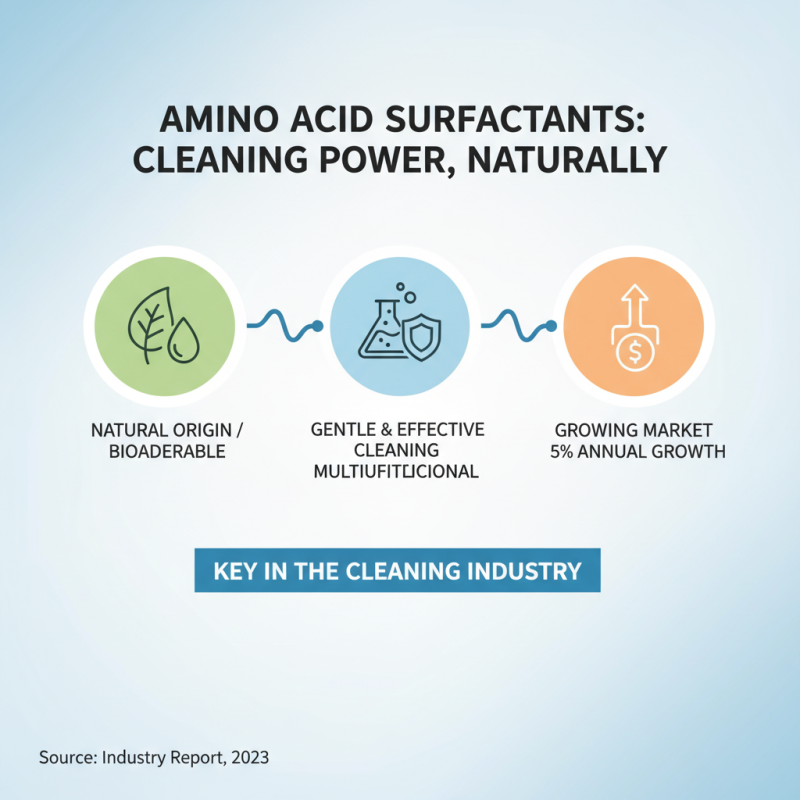
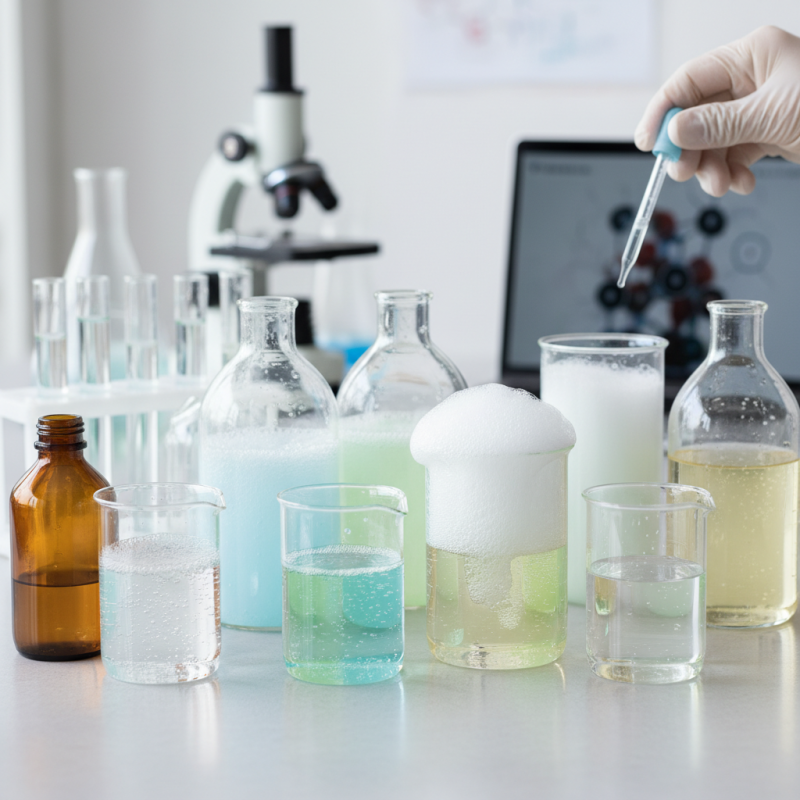
Amino acid surfactants have become significant in the cleaning industry due to their multifunctionality and biodegradability. These surfactants derive from natural sources and offer gentle yet effective cleaning properties. According to a recent industry report, the global market for amino acid surfactants is expected to grow by 5% annually, highlighting their increasing relevance in formulations.
These surfactants serve as effective agents in both personal care and household cleaning products. Their structure allows for a low irritation potential, making them ideal for sensitive skin applications. Studies indicate that amino acid surfactants can enhance foam stability and cleansing performance, outperforming traditional surfactants in many scenarios. Research shows they reduce surface tension significantly, enabling better removal of dirt and oils.
Despite their advantages, there are challenges to consider. The production of amino acid surfactants can be costly, affecting their wide-scale adoption. Moreover, variations in raw material quality may lead to inconsistent performance. Continuous research is vital to refine production processes and improve the efficiency of these surfactants in commercial use.
Key Properties that Make Amino Acid Surfactants Effective Cleaners
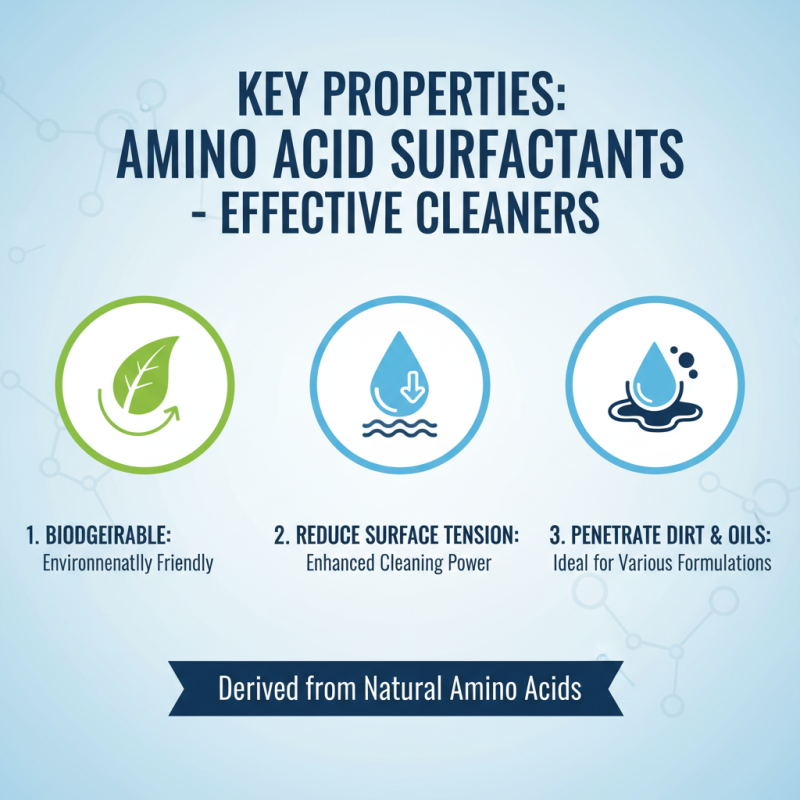
Amino acid surfactants are gaining traction for their remarkable cleaning abilities. Their structure, derived from natural amino acids, lends them unique properties. They are biodegradable, making them environmentally friendly. These surfactants can effectively reduce surface tension, enhancing their cleaning power. This property allows them to penetrate dirt and oils easily, making them ideal for various cleaning formulations.
These surfactants are known for their mildness on skin. This characteristic is especially beneficial in personal care products. Their ability to create stable foams also adds to their effectiveness. The foams assist in lifting and removing impurities, providing a thorough clean. Nevertheless, not all amino acid surfactants perform equally under different conditions. Some may require specific formulations for optimal results.
Their effectiveness can diminish when mixed with incompatible agents. Understanding these limitations is crucial for formulators. Choosing the right combination can significantly influence the cleaning performance. Developing a successful cleaning solution involves trial and error. Continuous refinement is necessary to enhance the efficacy of amino acid surfactants in cleaning applications. The balance between effectiveness and environmental impact remains an ongoing challenge.
Top 10 Amino Acid Surfactants: Applications and Benefits
Amino acid surfactants are gaining attention for their effectiveness in cleaning solutions. These ingredients are derived from natural sources, offering a gentle touch for various applications. They can effectively remove dirt and oil while being biodegradable. Many users appreciate the reduced risk of irritation, making them suitable for sensitive skin.
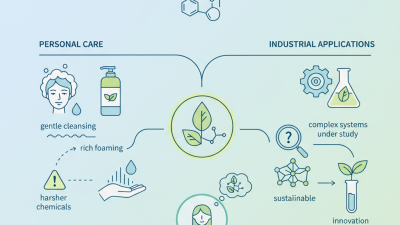
One significant advantage of amino acid surfactants is their versatility. They can be applied in personal care products, household cleaners, and industrial applications. Their foaming properties can enhance the user experience, ensuring a thorough clean. Yet, not all formulations provide the desired results. The concentration and combination with other agents can impact performance.
Though they are often considered eco-friendly, there’s room for improvement. Some formulations still contain harsh elements that may counteract their benefits. The challenge lies in optimizing these surfactants for maximum efficacy while minimizing any adverse effects. Continuous research and development are essential to refine their applications. Finding the right balance can lead to superior cleaning solutions that prioritize user safety and environmental responsibility.
Comparative Analysis: Amino Acid Surfactants vs. Traditional Surfactants
Amino acid surfactants are gaining traction as a modern alternative to traditional surfactants. These bio-based compounds feature a unique structure that allows them to be milder yet effective. Unlike traditional detergents, which often contain harsh chemicals, amino acid surfactants offer gentler cleaning options. This is particularly beneficial for sensitive skin or environmentally-conscious consumers.
One major difference lies in their biodegradability. Traditional surfactants can linger in ecosystems, causing pollution. In contrast, amino acid surfactants break down more easily. This means they are less harmful to aquatic life. However, their cleaning efficacy can vary depending on factors like concentration and formulation. Some might not perform as well in hard water conditions, which can be a drawback in specific situations.
Despite their benefits, many consumers remain unaware of amino acid surfactants. Their introduction to the market has not reached the same level as traditional surfactants. This gap can lead to skepticism about their effectiveness. More education is needed to inform both consumers and manufacturers about the advantages these surfactants offer. The industry must explore better ways to highlight their performance and sustainability.
Top 10 Amino Acid Surfactants for Effective Cleaning Solutions
| Amino Acid Surfactant |
Cleaning Efficiency |
Skin Compatibility |
Environmental Impact |
Cost |
| Sodium Lauroyl Methyl Isethionate |
High |
Excellent |
Low |
Moderate |
| Sodium Cocoyl Isethionate |
Moderate |
Good |
Low |
Moderate |
| Cocamidopropyl Betaine |
Good |
Very Good |
Moderate |
Low |
| Sodium Lauryl Sarcosinate |
High |
Excellent |
Low |
High |
| Lauryl Glucoside |
Good |
Good |
Very Low |
Moderate |
| Cocoyl glutamate |
Moderate |
Excellent |
Low |
Moderate |
| Sodium Lauroyl Glutamate |
High |
Good |
Low |
High |
| Sodium Caproyl Methyl Isethionate |
Moderate |
Excellent |
Very Low |
High |
| Sodium Oleoyl Isethionate |
High |
Good |
Moderate |
Moderate |
| Methyl Cocanoyl Isethionate |
Good |
Excellent |
Low |
High |
Environmental Impact and Safety Considerations of Amino Acid Surfactants
Amino acid surfactants are gaining attention for their cleaning efficacy and environmental impact. Unlike traditional surfactants, they derive from natural sources. This makes them biodegradable and less harmful to aquatic life. However, it's critical to assess their production process. Sustainable sourcing of amino acids remains a concern.
Safety considerations also arise with amino acid surfactants. While they are generally considered mild and less irritating, some users may still experience sensitivity. A thorough understanding of skin effects is crucial. It’s important to test products on a small skin area before broader use.
Despite their advantages, the environmental benefits can vary. Not all amino acid surfactants are created equal. Some may require significant resources for production. This raises questions about the overall environmental footprint. The industry needs to focus on transparency in sourcing and production methods to ensure truly sustainable options.